King’s College London
Technical development and delivery of a flexible, non-invasive wayfinding system for a Grade II* listed university campus.
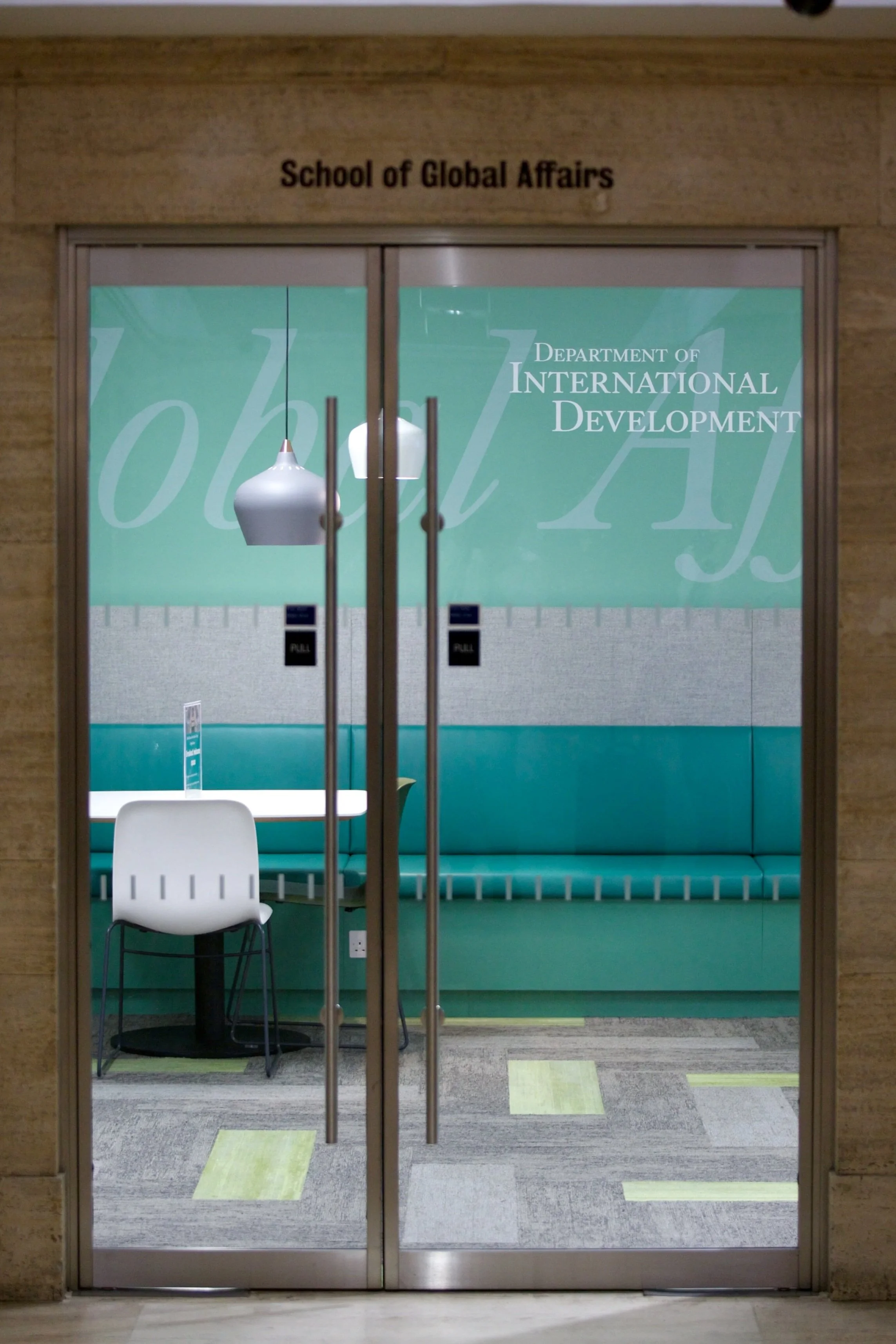
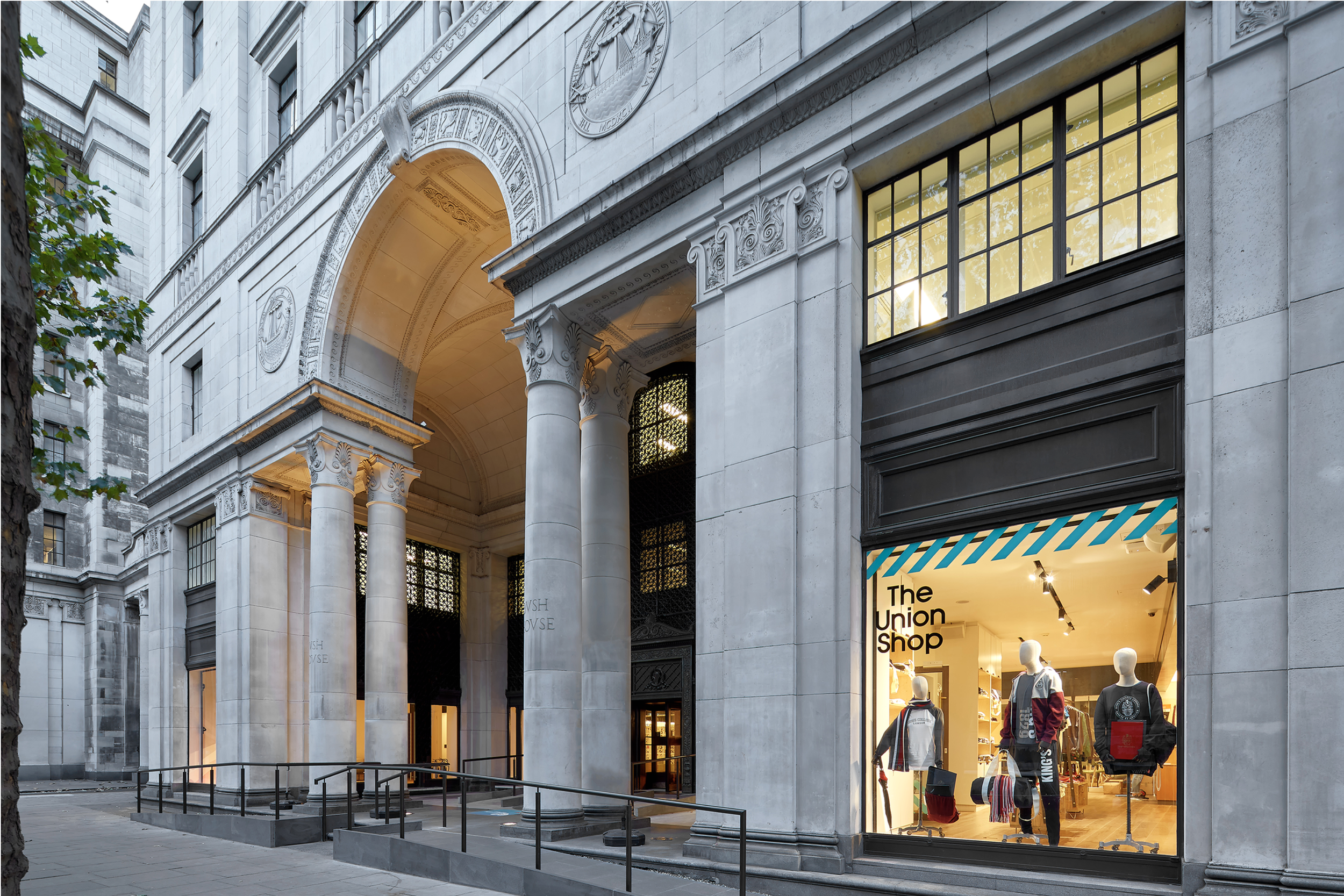
The redevelopment of Bush House for King’s College London required a holistic wayfinding scheme capable of supporting a large, multi-building campus within a highly sensitive heritage setting. A central requirement of the brief was to deliver a system that was both adaptable over time and fully reversible, with no permanent fixings to the historic fabric.Working in close collaboration with Atelier Works, we supported the development and implementation of a campus-wide wayfinding strategy that responded directly to these constraints. The scheme was designed to be rolled out in phases, with the North and South Wings becoming operational ahead of the North East and South East Wings, requiring flexibility in both sequencing and system logic.The wayfinding approach draws on the building’s original characteristics, including a naming convention derived from compass orientation. This provided an intuitive and historically grounded framework for navigation across the campus, reducing reliance on overly directive signage while reinforcing the identity of each wing.Key elements of the scheme include large freestanding totems positioned within major lift and stair lobbies. These elements were carefully designed to require no permanent fixings, instead using a modular, self-supporting construction that allows components to slot together. The approach references the logic of Charles and Ray Eames’ House of Cards, enabling flexibility, ease of update, and complete reversibility.Throughout the project, all signage elements were subject to extensive prototyping and on-site trials, with individual designs tested in situ for periods of three to six months. This process allowed scale, legibility, durability, and user interaction to be evaluated under real conditions. All stages of design development, site meetings, and factory visits were carefully documented, with material shared regularly with the client and key stakeholders to support review and approval.The completed wayfinding scheme spans four interconnected buildings, covering a total floor area of 55,059 m². The hardware budget for the project was £265,504 + VAT, equating to approximately £11,431 per floor or £6.00 per square metre. The scope included both internal and external signage, with planning approval and listed building consent secured through the local authority as part of our project management responsibilities.The project demonstrates how careful technical resolution, phased delivery, and a rigorous prototyping process can support a robust and adaptable wayfinding system within a complex, heritage-led environment.Graphic Design — © Atelier Works
Architects — © LTS Architects / © JRA
Works under the direction at — © Whybrow Pedrola